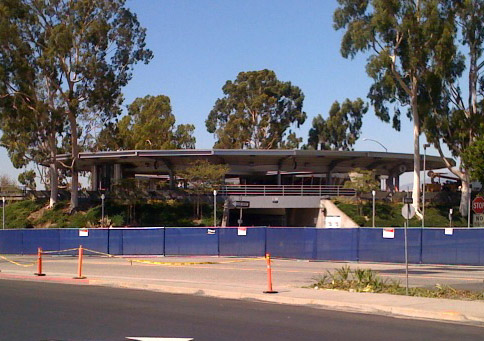
El Monte Station: Past, Present and Future

El Monte StationThe old El Monte Bus Station, which used to resonate with the roar of buses, is now eerily quiet.

Instead, the buses have moved to a temporary bus terminal in one of the station’s former parking lots. There are two bus islands; one for MTA buses, the other for Foothill. On days when the weather is too hot, too cold, rainy, etc. the distance between the two islands seems reminiscent of the “great gulf” of Luke 16:26. A policeman stationed in a cruiser barks out “Use the crosswalk!” to anyone daring to jaywalk between the two islands.

And that’s the way it will be for the next two years, while Metro builds a new improved terminal.

The El Monte station opened in 1973, as part of the El Monte Busway HOV lane project. The station, which served (then-)RTD and Greyhound buses, quickly became the busiest bus station west of Chicago. There were eight bays around the circular station; buses were assigned to a bay “on the fly” by RTD clerks using a PA system. There was also a RTD ticket office where passengers could buy tickets and passes, and pick up copies of bus schedules.

The station was very popular with commuters, who would park their cars in one of the parking lots, then hop on a bus for an eleven-mile, 20-minute ride to downtown Los Angeles. The parking lots had to be expanded several times in order to meet demand.

For the carless, the station served as probably the most important transfer point in the San Gabriel Valley. In addition to the express services to downtown, local and express buses fanned out eastward to West Covina and Pomona, northward to Pasadena and Sierra Madre, and southward to Whittier and La Puente. In recent years an express bus (#577) started operating to Long Beach.

But as time went on, and transit agency budgets got tighter, the condition of the station got worse and worse. Bathrooms became unspeakably dirty and used for other than their intended purposes. Originally, there were plans to put a restaurant in the building, but a set of snack machines—one particular machine offering cigarettes right next to the potato chips and candy bars—was the only food service ever provided. RTD once attempted to provide video screens with bus departures; these were vandalized and removed. Eventually, MTA, facing a budget shortfall, closed the ticket office in the station, leaving people with no way to get information or buy passes. In 2003, Foothill Transit reopened the ticket office, as one of its “Transit Stores.” Foothill also provided funds to spruce up the station a little bit.

Although the bus station did a great job of handling about 1,200 buses per day, it had its limitations. One time, a RTD double decker bus hit the overhanging roof near the station platform. From then on, double deckers were only allowed to use Berth #6, where the roof was a safe distance away from the curb. When Foothill Transit started its Silver Streak express service in 2007, the curb had to be modified to accommodate their 60-foot articulated buses.

In 2006 MTA added six new bus bays in the parking lot just west of the main station. Most of the buses initially serving the new stops were local lines using smaller buses (Foothill #269, etc.), making the new facility reminiscent of the “Kids’ Table” at Thanksgiving dinner. But eventually other routes used it as well. At any event, it was a bit of a walk between the new stops and the main terminal, so connections between routes became more complicated.

The new, improved, El Monte Bus Station is scheduled to open sometime in 2012. It promises additional bus capacity, airport bus service, bicycle lockers, enhanced security, and (we all can hope), clean restrooms.

Until then, don’t forget to “Use The Crosswalk!”

Sources:

Hebert, Ray. “RTD Shuffles Deck.” Los Angeles Times, Feb 28, 1986

Scauzillo, Steve. “From the Editor’s Desk: Foothill Transit Heard My Call” San Gabriel Valley Tribune, Dec 29, 2001

Rubin, Karen. “Bus Station Blues.” Pasadena Star News, Jan 22, 2002

“Scauzillo, Steve. “El Monte bus station’s last days” , San Gabriel Valley Tribune, Sept 16, 2010. http://www.sgvtribune.com/opinions/ci_16095237
http://www.metro.net/projects/elmonte/

Picture essay: Expo Line construction

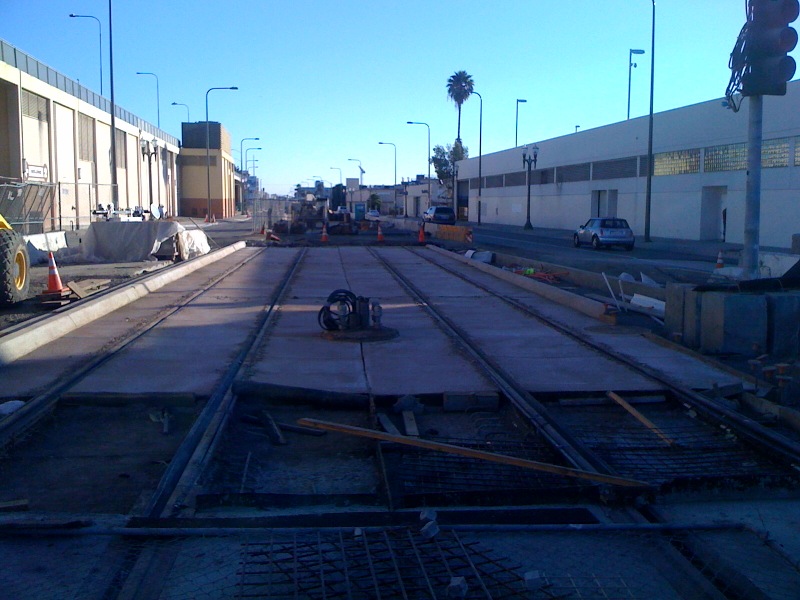
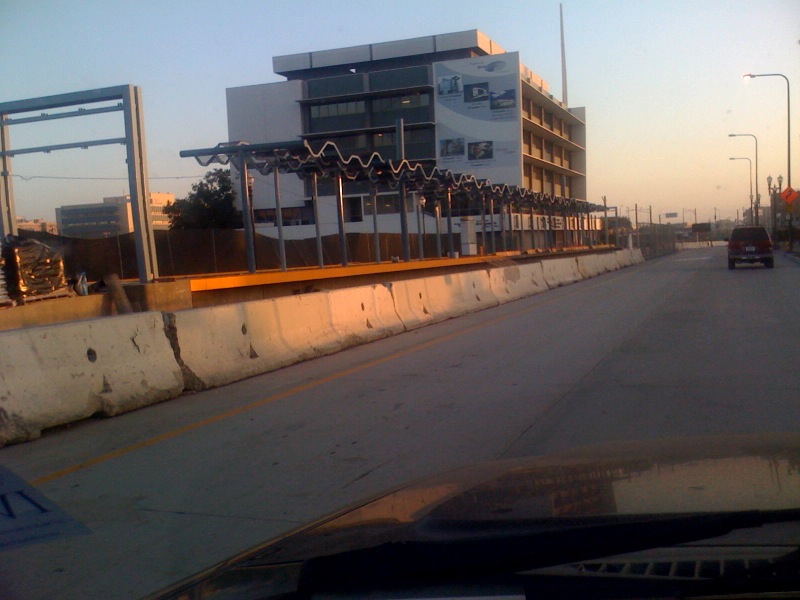
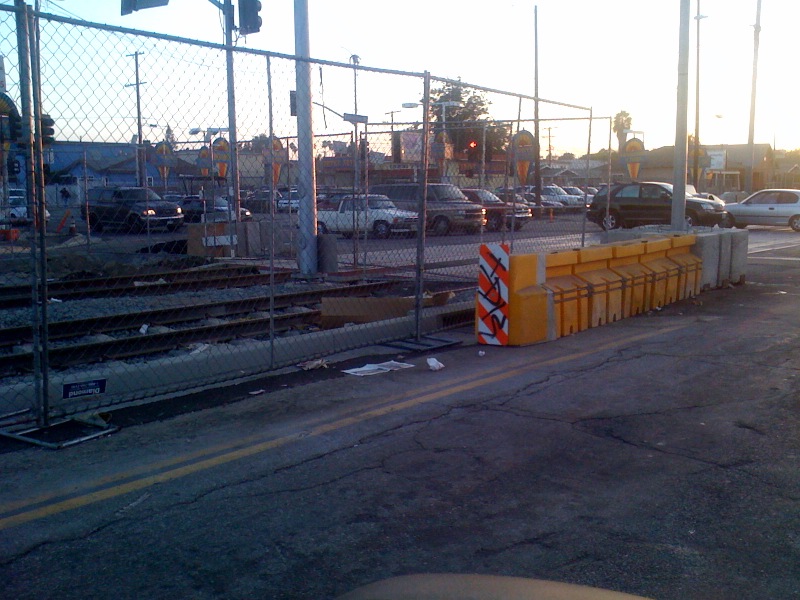
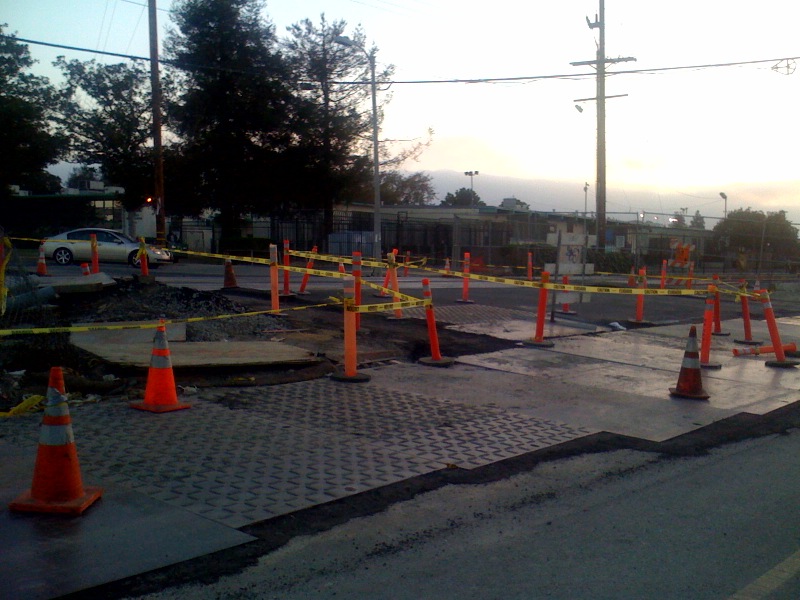
Here are a few pictures I took along the Expo Line right of way.

All of these pictures I shot with an iPhone camera; some were taken out of train or car windows. These pictures were taken in early-to-mid September 2010.

Please note all photos are (c) Charles P . Hobbs.

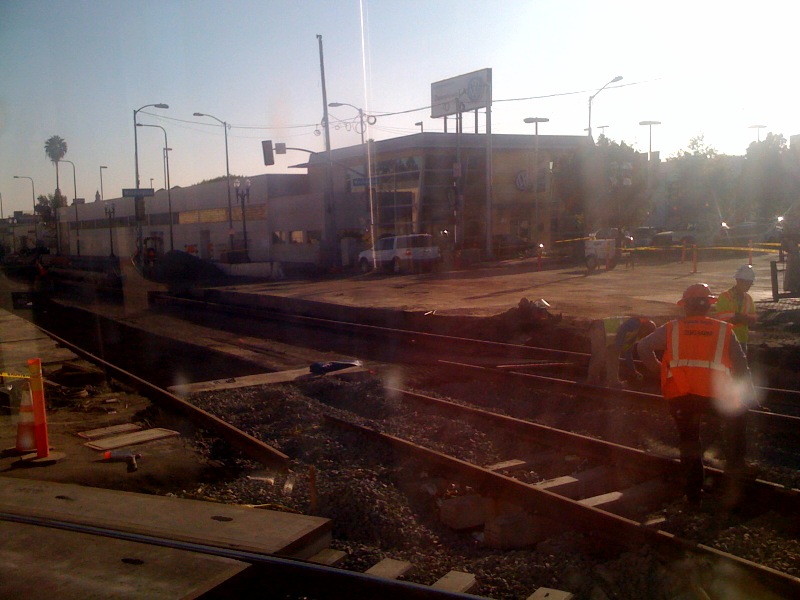
Trackwork at Washington Bl and Flower St, south of Downtown Los Angeles

Trackwork at Washington Bl and Flower St, south of Downtown Los Angeles

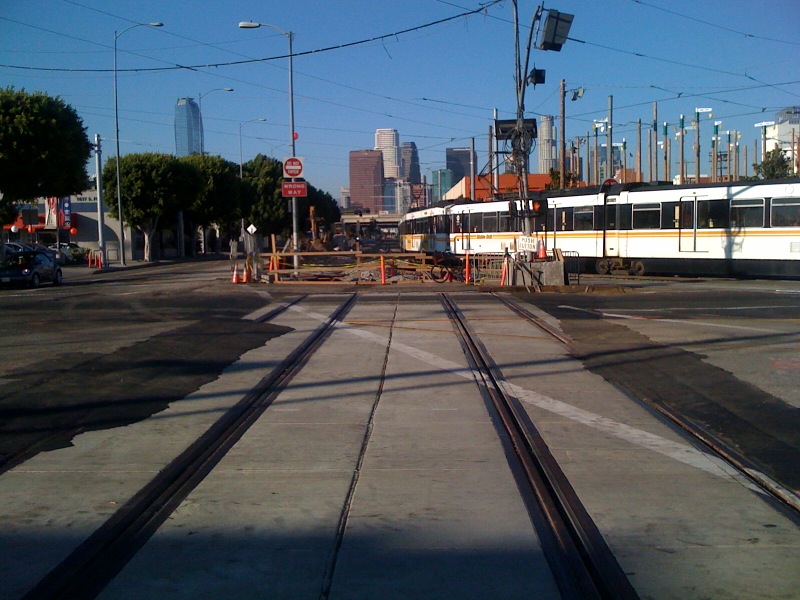
Flower and Washington, looking north. Metro Blue Line train

Flower and Washington, looking north. Southbound Metro Blue Line train turning eastward on Washington.

Expo Line looking south along Flower St from Washington

Expo Line looking south along Flower St from Washington.

Jefferson station area

Jefferson station construction. Expo Line is about to go underground and turn westward

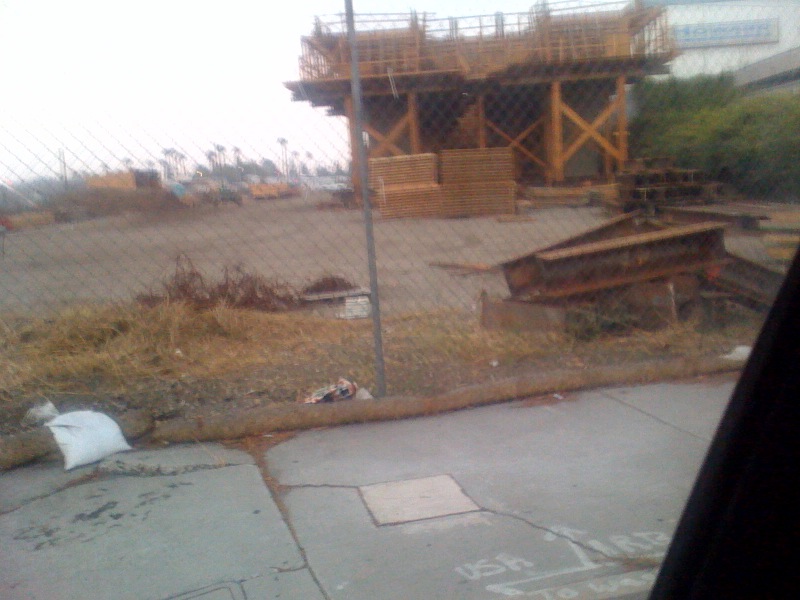
Expo Line. Western Ave. station construction

Expo Line. Western Ave. station construction

Farmdale station construction. Dorsey High School in background.

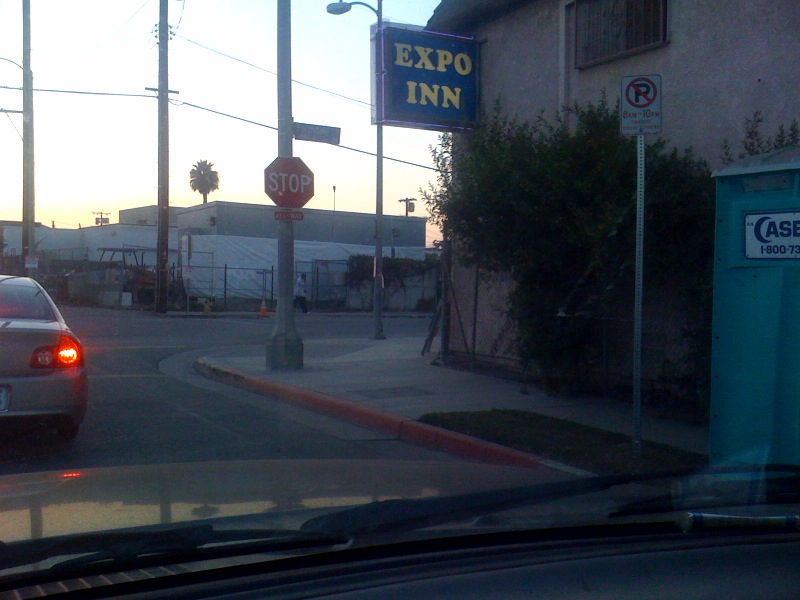
"Expo Inn" near Farmdale Expo Line station.

"Expo Inn" near Farmdale Expo Line station.

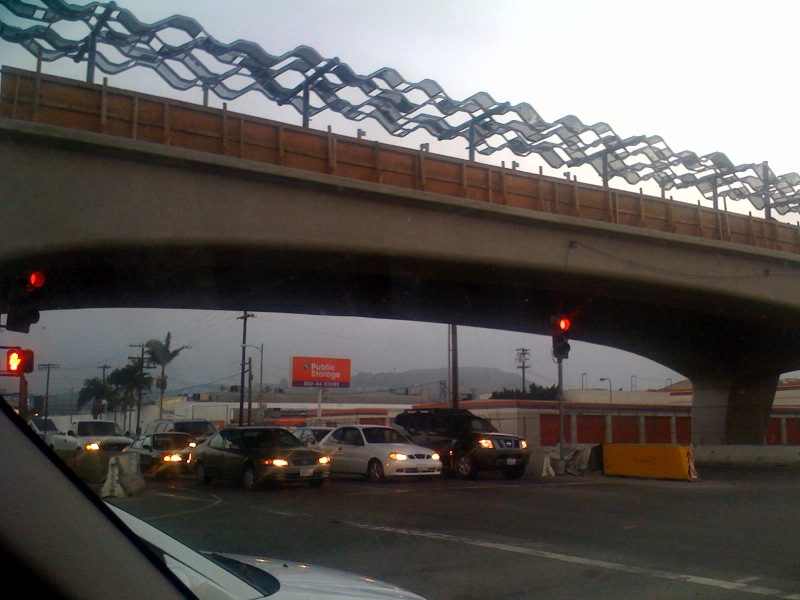
Expo La Cienega Bl. overpass and station

Expo La Cienega Bl. overpass and station. A similar bridge has been built over La Brea Ave, about one mile to the east.

Expo Line in Culver City

From the Venice Short Line to Rapid Bus #733: A History of Transit Service on Venice Boulevard.

In honor of Metro’s new Venice Bl. Rapid Bus (#733), I will describe the history of public transportation on Venice Boulevard.

It Began With A Rail Line….

The story starts in 1897 when the Pasadena and Pacific Railway, one of Los Angeles’ early streetcar companies, built a line along 16th Street (later renamed Venice Boulevard) from Hill St. in downtown, to Vineyard, a neighborhood just east of Crenshaw Boulevard. At Vineyard, the line branched to Beverly Hills, West Los Angeles and Santa Monica. In 1902, the Los Angeles Pacific Railroad extended this line westward along Venice Blvd. to Ocean Park; about a year later, a connection was made to Santa Monica. Although the line was generally speedy, congestion along the 16th Street portion caused the Los Angeles Pacific to consider building a subway under that street. Real estate developers in Beverly Hills promoted properties in anticipation of the new subway. Unfortunately, the subway idea was abandoned in 1907 due to financial problems.

Pacific Electric acquired the The Venice Short Line (as it came to be called) as part of its “Great Merger” in 1911. The Venice Short Line catered to longer-distance trips; PE ran local trains between downtown Los Angeles and Vineyard to accommodate short-haul travel. In practice, most people found it just as easy to walk to the Los Angeles Railway lines on nearby Pico or Washington Boulevards; LARY fares were generally less as well.

Buses to the Beach

The Venice Short Line was the most direct way to get to the beach from downtown Los Angeles, and it was very popular with beachgoers. It also attracted competition from bus companies as soon as practical buses were developed. (Before 1917, there was little regulation as to where bus companies could operate).

One short-lived competitor was the Pacific Motor Coach Company. Starting in April 1914, this company ran double-deck buses between Los Angeles and Venice, along nearby Washington Blvd. Their buses, built on truck chassis, were not particularly comfortable. Strong competition by jitneys (motorists who offered rides to people waiting at bus/streetcar stops) also contributed to Pacific Motor Coach going out of business by December.

About ten years later, businessman Ralph Carrasco operated several bus lines in and around Venice (which was an independent city until 1925). His principal route operated along Venice Blvd. between the Venice traffic circle and Motor Ave. in Culver City. This was in direct competition with the Pacific Electric route, but no one with any authority paid any attention until Venice was annexed to the City of Los Angeles in November 1925. Carrasco’s line now fell under the jurisdiction of the city’s Board of Utilities and Transportation, who asked him to cease operating it. Carrasco sold his other bus routes to Bay Cities Transit, which eventually was acquired by Santa Monica’s Big Blue Bus.

There was still demand for additional transportation to Venice, especially if it could offer lower fares than PE did. The City of Culver City began a municipal bus service along Washington Blvd. in March 1928, connecting Venice with the Los Angeles Railway streetcar terminal at Washington and Rimpau. Santa Monica set up a similar service along Pico Bl in April, connecting with the Pico/Rimpau terminal. This time, PE had little power to do anything about its new competition. Unlike privately-owned bus companies, municipal carriers were not subject to the jurisdiction of the Railroad Commission. LA’s BPU&T did not object to the municipal bus lines, as long as they did not ask to operate all the way to Downtown LA. A streetcar fare, plus the bus fare to the beach, was substantially cheaper than the PE fare from Downtown to Venice. As the nation entered the Great Depression, these buses further cut into the Venice Short Line’s ridership. Both the Culver City and Santa Monica bus systems exist to this day; these two lines (CC #1 on Washington and BBB #7 on Pico, respectively) are their busiest routes.

PE Goes Bus(t)

By 1950, PE, facing increased maintenance costs, decided to replace the Venice Short Line with a bus route. PE combined the Venice Bl. bus line with existing line #75 (which was the LA-Beverly Hills-Santa Monica route, “bussified” in 1940) and operated it as a big, two-way loop: LA-Vineyard-Culver City-Venice-Santa Monica-Beverly Hills-Vineyard-LA.

In 1963, LAMTA broke the route and reassigned the Beverly Hills portion to Line #4, which ran through Downtown and then Santa Monica Blvd. LAMTA extended #75 through Downtown and north into Echo Park. (A bus route #91, which ran from Vineyard via Venice Bl. through Downtown and into Echo Park, had operated since 1950,  replaceing the PE’s local Venice Bl. trains)

SCRTD, in 1981, implemented a new limited stop route along Venice Bl. It was numbered #313. In the “Great Renumbering” in 1983, #75 became #33, and #313 was renumbered to #333. Thus began the practice of adding 300 to the local bus route number to designate the corresponding limited stop route.

The #33 and #333 was extended to serve Union Station (in 1993) and Gateway Plaza, behind Union Station (in 1996).

An Odd Owl, Indeed

In December 2008, Metro reconfigured the service so that #33 only ran between 6th/Main (Downtown LA) and Venice. The #333 covered the entire length of the route, from Union Station to Santa Monica. This service pattern was observed even during late night and “owl” service, making the #333 possibly the first limited-stop owl service in the history of transit in Los Angeles. Although it allowed Metro to turn buses around faster, it must have been inconvenient for some riders to walk to a limited stop in the middle of the night. By late June 2010, Metro replaced the #333 with the #733 Rapid Bus, and owl trips on the #33 now include the entire route from Union Station to Santa Monica.

References:

Lines of Pacific Electric – Western District (Interurbans Press)

Duke, Donald. Pacific Electric Railway. Volume 4 – The Western Division

Bail, Eli. From Railway to Freeway, p. 19, 69-71

Electric Railway Journal, Feb 13, 1915, p. 324

Los Agneles. Bureau of Public Utilities and Transportation.  50th Annual Report, 1958-59, p. 84

Wolinsky, Julian. “Buses to the ‘Heart of Screenland’.” Bus World, v. 10, no 3, p. 8-15

Ayer, Bob. History of Santa Monica’s Big Blue Bus
Southern California Association of Governments. Transit Development Program.
(contains histories of bus routes up to 1971)
Jones, Lionel. Los Angeles Bus Line History Book (updated route histories as of 2004)

Bus schedules, maps, agency agendas, etc. as appropriate

Comments and corrections welcomed